Build-to-Suit Data Centre in Malaysia — How the Deal Is Actually Structured

In a build-to-suit deal the tenant's requirements are fixed before a foundation is poured, and the developer takes the construction risk in exchange for a long lease. It is the dominant structure for large Malaysian capacity right now, and the land is where it starts.
What build-to-suit means
A build-to-suit (BTS) data centre is designed and constructed for a specific, identified tenant under terms agreed before construction. The tenant locks in the power density, resilience tier, floor loading, security standard and delivery date. The developer or landlord funds and builds, then leases the facility back over a long term — typically fifteen to twenty-five years with renewal options.
It sits between two alternatives. Colocation means renting space in an operator's existing hall: fast, flexible, least control. Self-build means buying the land and building it yourself: maximum control, maximum capital and maximum risk. BTS trades some control for someone else's balance sheet and delivery expertise.
The common deal structures
Powered shell
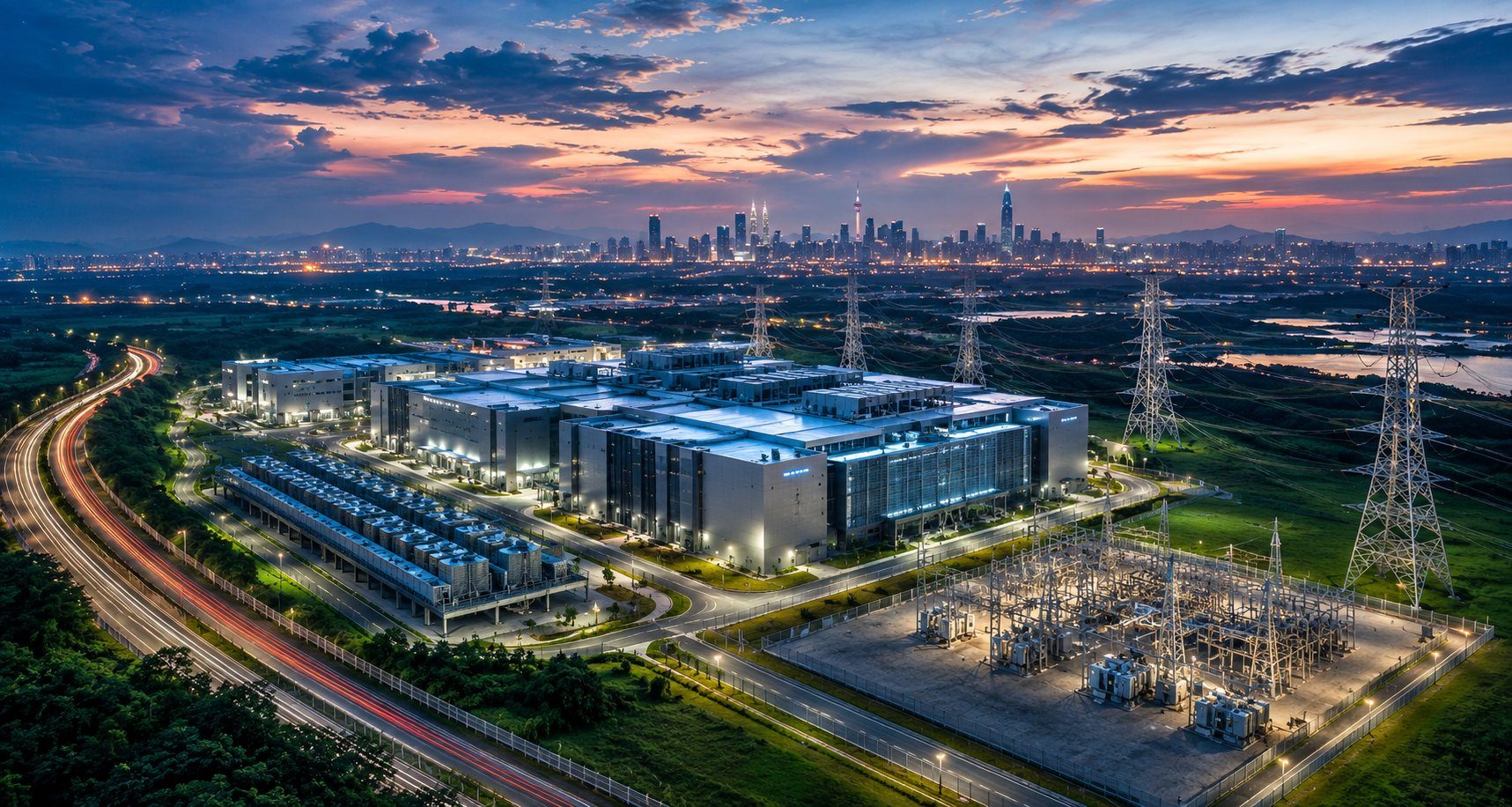
The developer delivers the building, the power infrastructure to the meter and the base services. The tenant fits out the white space — their own cooling topology, racks and electrical distribution inside the hall. This is popular with hyperscalers who want their own standardised internals and will not accept a landlord's design.
Fully fitted turnkey
The developer delivers a complete, commissioned facility including cooling and electrical distribution. Rent is higher because the developer has funded far more capex and carries the commissioning risk. This suits enterprise and government tenants without in-house data centre engineering.
Land lease with tenant build
The landowner grants a long ground lease and the tenant builds. The landowner keeps the land and collects ground rent, with the building reverting at lease end. Lower return than a BTS lease, but also far lower capital and construction risk — often the right answer for a family landowner who wants exposure without becoming a developer.
Which one suits a landowner
If you own a suitable parcel and are not a developer, a ground lease or an outright sale will usually beat trying to fund a BTS build. The returns on paper look better for BTS, but they are returns on capital and construction risk you may not want to carry.
What the landowner actually brings
- The land — clean title, adequate acreage, sensible geometry and room for later phases.
- A power pathway — proximity to adequate transmission, and ideally an application already lodged.
- Fibre — at least two independent routes, documented rather than assumed.
- Planning status — the closer to approved for the use, the more the land is worth.
- Water — a supply position that supports the cooling design the market wants.
The honest ranking
Of those five, a documented power pathway moves the price more than everything else combined. Two otherwise identical parcels can differ by a multiple on the strength of their utility position alone.
Timeline from land to handover
For a Malaysian BTS facility, plan on roughly three to five years from site identification to live capacity. Land negotiation and due diligence take three to nine months; conversion, planning and DCTF-track approvals commonly take nine to eighteen; construction and fit-out eighteen to thirty; commissioning three to six. The utility connection usually sets the critical path, which is why operators chase sites where that process has already started.
The approval layer
Malaysia's Data Centre Task Force, formed in February 2025, is the coordinating body for large projects, and every project it approved carries a minimum 30% local content requirement, with MIDA monitoring compliance through implementation reports every six months. Johor runs an additional Special Technical Committee assessing water, electricity demand, utility infrastructure and site suitability. Neither is a formality; both belong in your programme.
How Ken helps
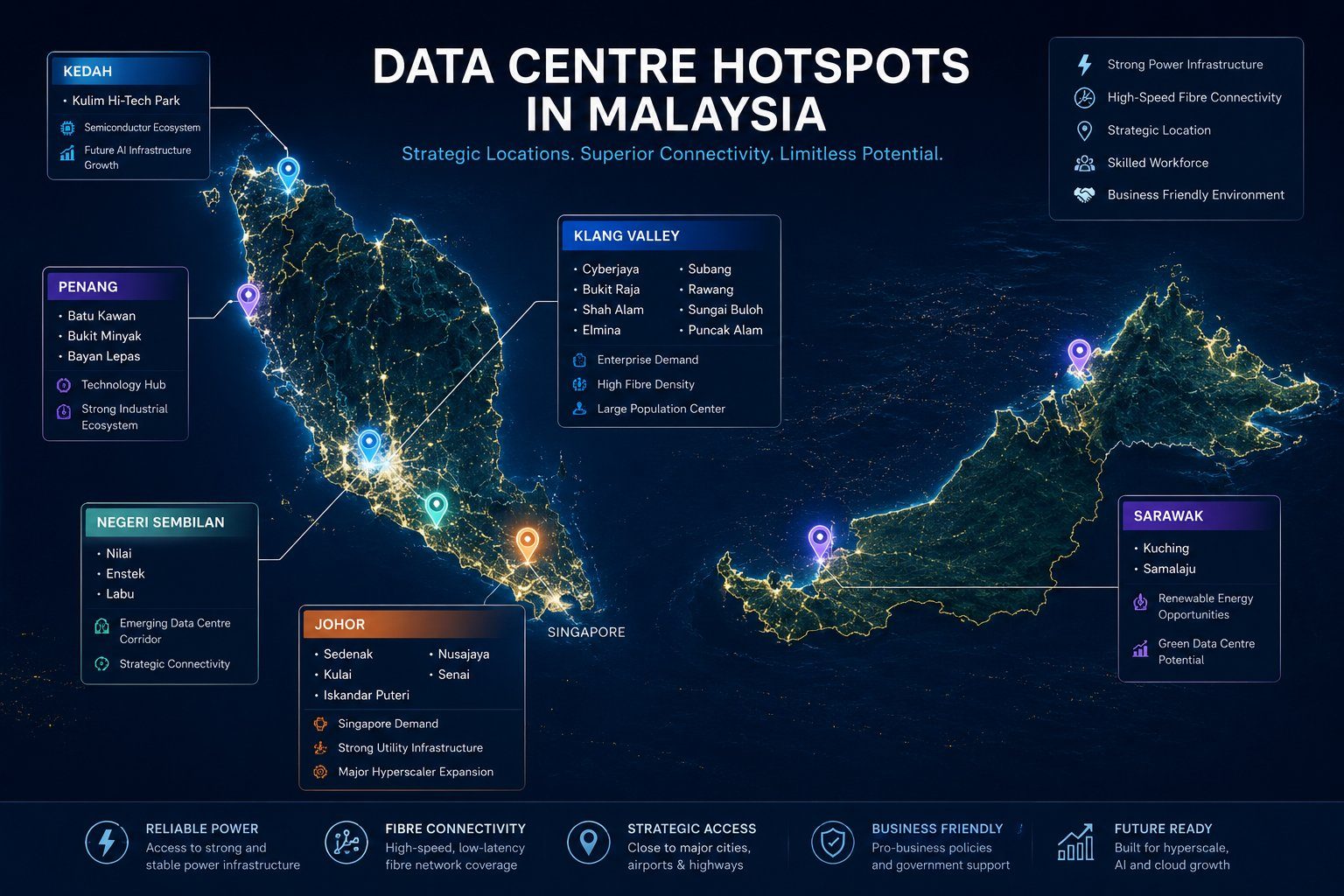
Most BTS deals fail at the land stage, not the construction stage — the site turns out not to have the power or the title that the marketing implied. Ken brokers data centre and development land across the Klang Valley, Johor and Negeri Sembilan and can tell you which sites survive diligence. If you own land that operators are circling, he can run a proper options analysis before you commit to one buyer.
Frequently Asked Questions
What is a build-to-suit data centre?
A facility designed and built for one identified tenant on terms fixed before construction, then leased back over a long term — typically fifteen to twenty-five years. The developer funds and builds; the tenant specifies and commits.
How long does a build-to-suit data centre take in Malaysia?
Roughly three to five years from site identification to live capacity. The utility connection normally sets the critical path, not construction.
What is a powered shell?
A building delivered with power to the meter and base services, leaving the tenant to fit out the white space with their own cooling and electrical distribution. Hyperscalers usually prefer it because they want their own internals.
Should a landowner do a BTS build or just sell?
If you are not a developer, a long ground lease or an outright sale usually beats funding a build. BTS returns look higher on paper, but they are compensation for capital and construction risk you may not want.
What is the 30% local content rule?
Every project approved by Malaysia's Data Centre Task Force carries a minimum 30% local content requirement, with MIDA monitoring compliance via six-monthly implementation reports. Factor it into procurement planning early.
Thinking of buying or selling in Malaysia?
Ken Tck is a Semi-D & Bungalow Specialist across KL & Selangor. Get current listings, honest pricing and a free valuation — no obligation.