Data Centre Power in Malaysia — How Much, From Where, and What It Costs
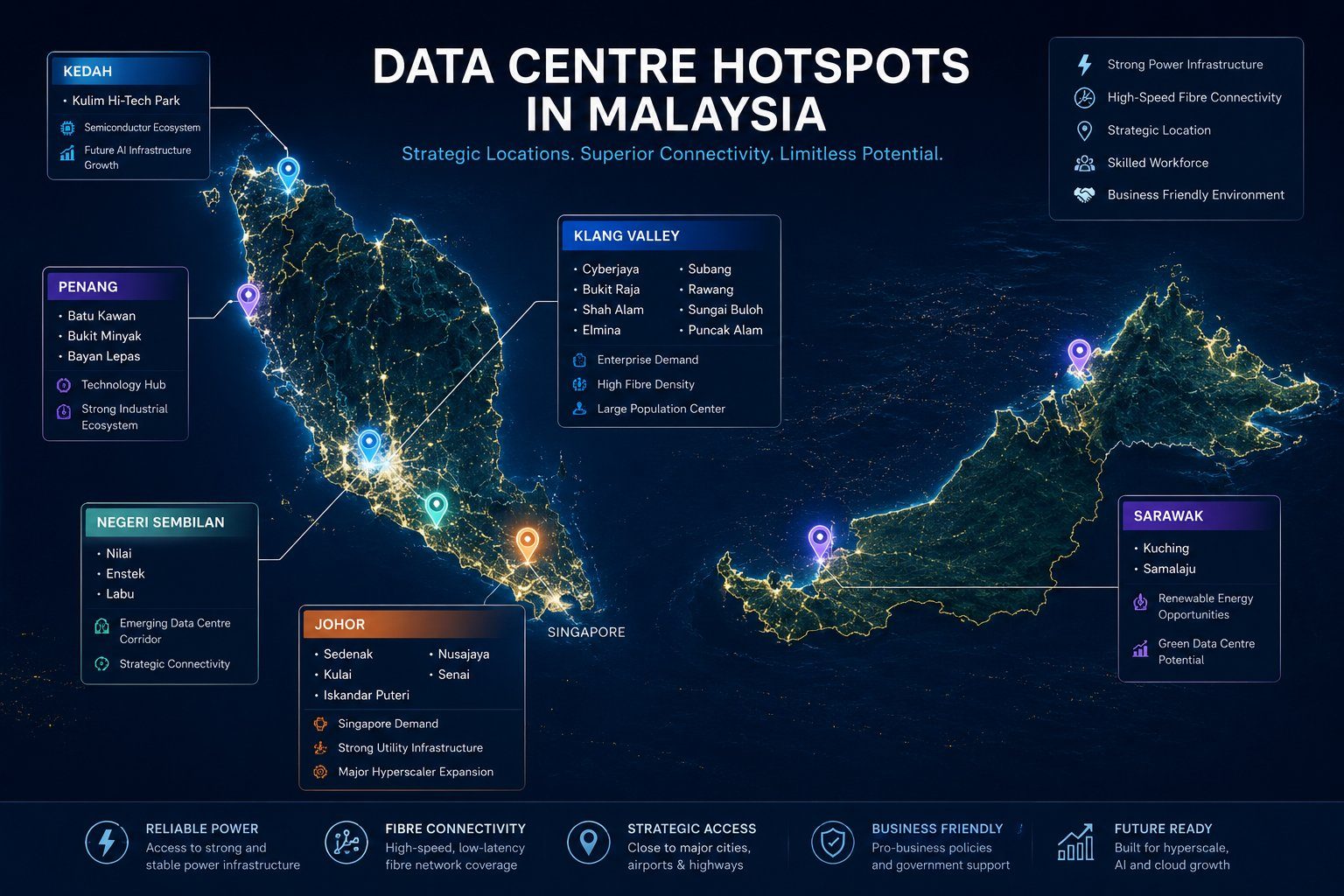
Power is the whole game. A data centre site without a credible power pathway is agricultural land with a story attached, and the tariff exposure over a twenty-year hold is an order of magnitude larger than whatever you pay for the dirt.
How much power, by facility size
Capacity is quoted as IT load — the power delivered to the equipment — with total site draw running higher once cooling and losses are counted. The ratio between them is the power usage effectiveness, or PUE, and in Malaysia's climate a good modern facility targets somewhere around 1.3 to 1.5.
Working bands
- Edge or enterprise room: under 5 MW
- Mid-size commercial facility: 10–30 MW
- Large colocation building: 30–100 MW
- Hyperscale campus: 100 MW to several hundred, phased
Translating that into a grid request
A 20 MW IT load at PUE 1.4 draws roughly 28 MW at the meter, and you request firm capacity above that for headroom and startup transients. Sizing the request accurately matters because over-requesting inflates your connection charges while under-requesting means reapplying later, at the back of a queue that has grown considerably.
Voltage tiers and what they imply
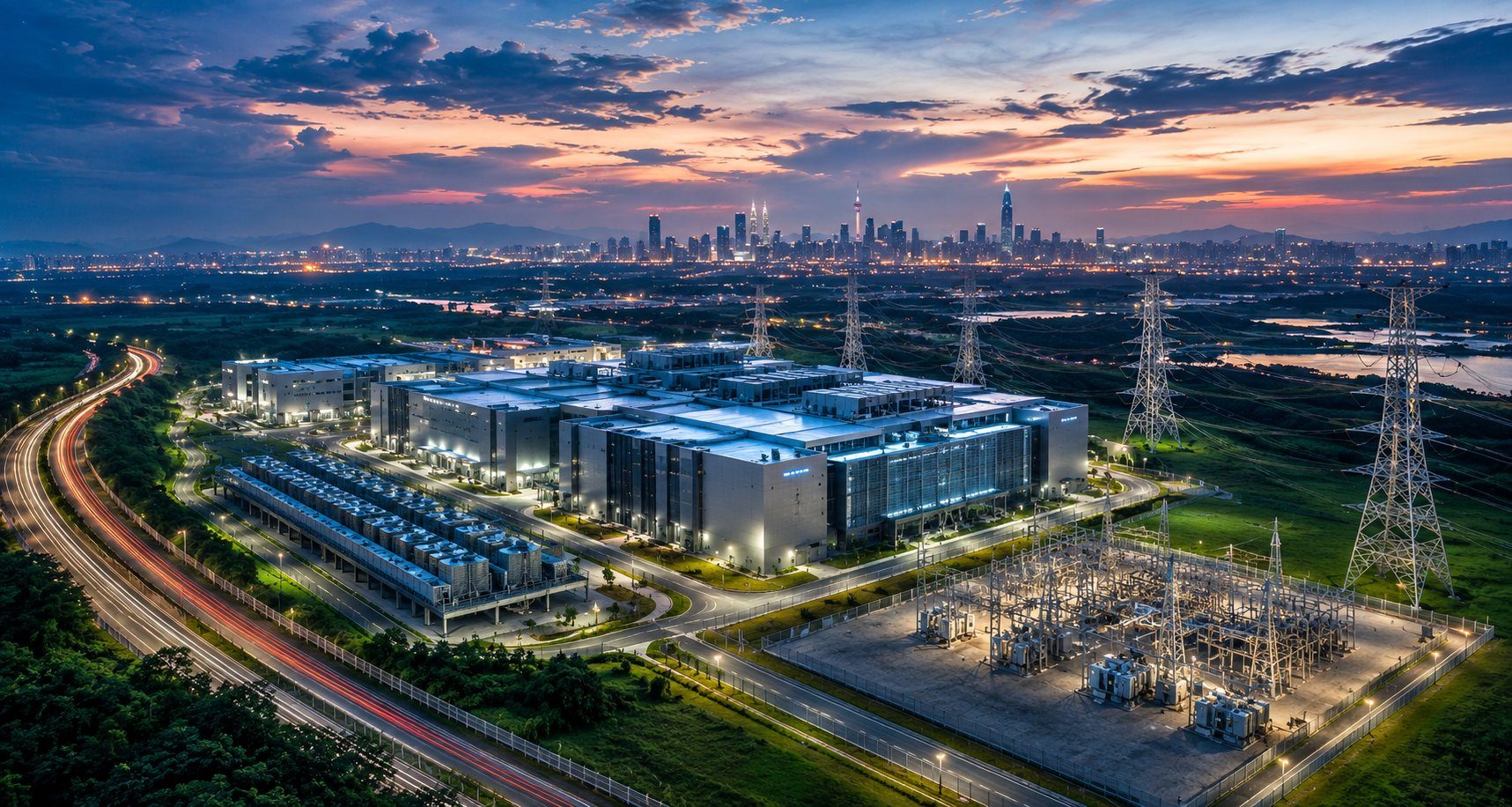
Supply in Malaysia is taken at low, medium, high or extra-high voltage, and your load decides which. Anything of data centre scale sits at high voltage or above, which means a dedicated intake substation on your land, your own switchgear, and a commercial relationship with the utility rather than a standard connection.
Why the voltage tier changes your site search
A medium-voltage distribution network is widespread; transmission-level infrastructure is not. The moment your load requires high or extra-high voltage, your viable land shrinks to parcels near transmission corridors and major substations — which is precisely why data centre clusters form where they do rather than spreading evenly.
Redundancy
Resilience tiers are expressed as N, N+1, 2N and so on. What matters for the land is that genuine redundancy requires two independent supplies from different substations over physically separate routes. Two circuits down the same corridor from the same substation share a single point of failure, and a tenant's technical due diligence will find that out even if the marketing did not mention it.
On-site generation
Standby diesel generators and increasingly battery storage cover the gap between a grid outage and generator start. They need land: a generator yard, bunded fuel storage sized for the contracted run time, and acoustic treatment if there is housing anywhere near. Budget the area at the masterplan stage.
Timeline and cost
A transmission-level connection is typically a multi-year process covering application, technical study, agreement, design, construction of the intake substation and any contributory reinforcement works, then commissioning. It commonly sets the critical path on the whole development, which is why sites with an application already lodged and acknowledged trade at a clear premium.
The number that should worry you most
Industry analysis in 2026 indicated that rising electricity and water tariffs could add up to roughly RM120 million a year to the cost of running a 50 MW facility. Compare that with land at, say, RM5 million an acre: your entire land budget can be a single year's tariff movement. Model tariff sensitivity properly, and treat energy procurement as the main commercial workstream rather than an afterthought.
What this means for buying land
- Verify the power position independently — never take the seller's word
- Pay a premium for a lodged, acknowledged application; it is usually worth it
- Check there is room inside the parcel for the intake substation and switchyard
- Confirm a second feed from a genuinely different substation
- Price the land assuming your tariff model is wrong in the unfavourable direction
How Ken helps
Ken sources data centre land with the power question asked first rather than last, and can tell you which marketed sites have a real utility pathway versus an optimistic narrative. For landowners near transmission infrastructure, that pathway is very often the most valuable thing you own.

Frequently Asked Questions
How much power does a data centre need?
Under 5 MW for an enterprise room, 10–30 MW for a mid-size facility, 30–100 MW for a large colocation building, and 100 MW upward for a phased hyperscale campus. Total site draw exceeds IT load by the PUE factor, typically around 1.3–1.5 in Malaysia's climate.
What voltage will a data centre take supply at?
High voltage or above for anything of data centre scale, which means a dedicated intake substation on your land and a commercial relationship with the utility rather than a standard connection.
How long does a grid connection take?
Typically a multi-year process covering application, technical study, agreement, design, substation construction, reinforcement works and commissioning. It commonly sets the critical path for the whole development.
What does real redundancy require?
Two independent supplies from different substations over physically separate routes. Two circuits down the same corridor from one substation share a single point of failure and will not survive a tenant's technical diligence.
How big is the electricity cost compared with the land?
Far bigger. Analysis in 2026 suggested tariff rises could add up to around RM120 million a year to a 50 MW facility's power bill — potentially more than the entire land budget, every year.
Thinking of buying or selling in Malaysia?
Ken Tck is a Semi-D & Bungalow Specialist across KL & Selangor. Get current listings, honest pricing and a free valuation — no obligation.