Data Centre Site Selection in Malaysia — A 40-Point Checklist
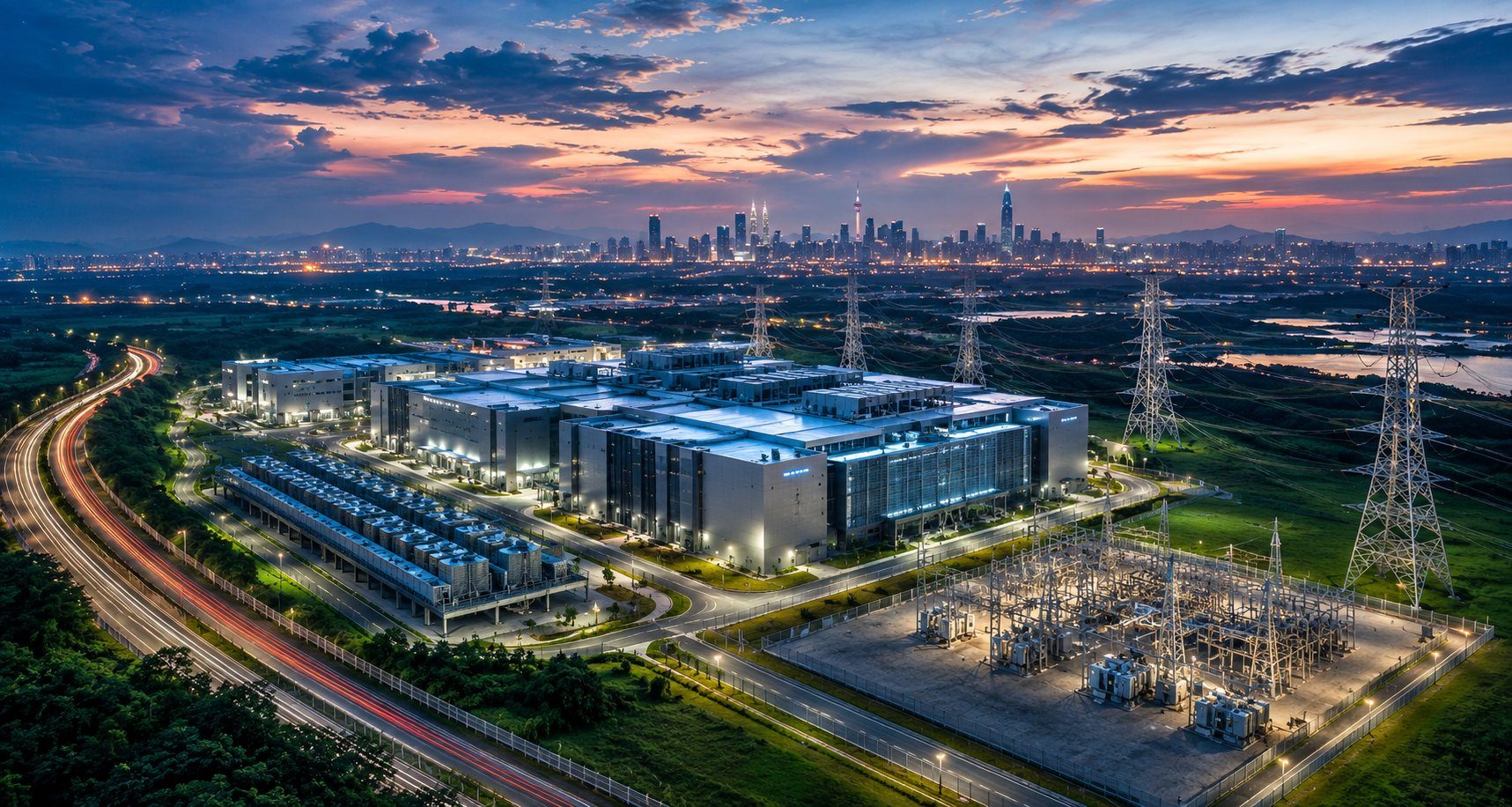
Site selection is a process of elimination. Most parcels fail on one hard constraint, and the discipline is finding that constraint in week one rather than month eight. This checklist is ordered by how often each item kills a deal.
How to use this list
Work it top to bottom and stop at the first hard failure. The items are deliberately ordered by kill rate: power eliminates more Malaysian sites than everything below it combined, and there is no point surveying flood levels on a parcel that will never get its allocation.
Tier 1 — the deal breakers
Power
- Firm committed capacity at the point of supply, in writing, with a date
- Serving substation: identity, distance, spare capacity, voltage level
- Second independent feed — route, substation, timeline
- Connection cost and who bears contributory reinforcement works
- Staged ramp available for later phases
- Route to renewable or PPA supply
Fibre
- At least two physically diverse routes, verified on a map rather than asserted
- Carriers present and whether the site can be carrier-neutral
- Distance to nearest exchange or cable landing station
- Lead time and cost to bring each route onto the parcel
Title and permitted use
- Title type, land category and express conditions
- Whether the intended use is permitted, or requires conversion
- Restrictions in interest, Malay Reserve status, Bumi quota
- Caveats, charges, encumbrances and pending litigation
- Access — is there a legal right of way, or only a practical one?
The access trap
A surprising number of large Malaysian parcels are reached across someone else's land by long habit rather than by registered easement. It works perfectly until the day you need to move a transformer or the neighbour sells. Have your solicitor confirm a registered legal access, not a historic arrangement.
Tier 2 — the cost and risk items
Water
- Committed supply volume and pressure, and the supplying authority's position
- Whether the district is water-stressed and how that affects approval
- Discharge consent for blowdown, and rainwater harvesting potential
- Whether your cooling design can be revised to a lower-water option
Physical risk
- Flood history and modelled flood level, not just the seller's assurance
- Ground conditions, soil bearing capacity and piling requirement
- Slope stability where the land is cut or filled
- Distance from fuel depots, chemical plants and other hazard sources
- Flight paths and airport proximity for height restrictions
The geotechnical surprise
Data centre floor loadings are heavy and the equipment is intolerant of differential settlement. A site with soft ground can carry a piling bill large enough to erase whatever you saved on the land. Commission a proper soil investigation before exchange, not after.
Geometry and expansion
- Shape — long thin parcels waste area once setbacks and standoff are applied
- Usable area after setbacks, easements, reserves and buffer zones
- Contiguous adjoining land for later phases, and who owns it
- Room within the parcel for substation, generators, fuel and chiller yard
Tier 3 — the things that bite later
- Neighbours — residential proximity means noise complaints about generators and chillers
- Local authority appetite, and whether the district has approved similar schemes
- Construction access for oversized loads such as transformers and chillers
- Labour availability and the 30% local content requirement on approved projects
- Exit — who is the next buyer if your plan changes?
How Ken helps
Ken screens candidate parcels against this list before taking them to market, and works from registered transaction evidence rather than asking prices. If you are evaluating a specific site, send him the title details and he will tell you what he would want verified first.

Frequently Asked Questions
What kills most data centre sites in Malaysia?
Firm committed power, by a wide margin. Work your checklist in order and stop at the first hard failure — there is no point surveying flood levels on a parcel that will never get an allocation.
How do I verify fibre diversity?
Ask for the routes on a map and have them confirmed by the carriers, not the seller. Two routes leaving in the same direction down the same corridor are one route for resilience purposes.
Why does land shape matter?
Once setbacks, easements, buffer zones and security standoff are applied, a long thin parcel can lose far more usable area than a compact one of the same acreage. Always work in usable area, not title area.
Should I do a soil investigation before buying?
Yes. Data centre floor loadings are heavy and the equipment cannot tolerate differential settlement. A piling bill on soft ground can exceed what you saved on the land price.
What is the access trap?
Many large Malaysian parcels are reached across neighbouring land by long habit rather than registered easement. Have your solicitor confirm a registered legal right of way before you commit.
Thinking of buying or selling in Malaysia?
Ken Tck is a Semi-D & Bungalow Specialist across KL & Selangor. Get current listings, honest pricing and a free valuation — no obligation.