The DCTF Track — How Large Data Centre Projects Get Approved in Malaysia
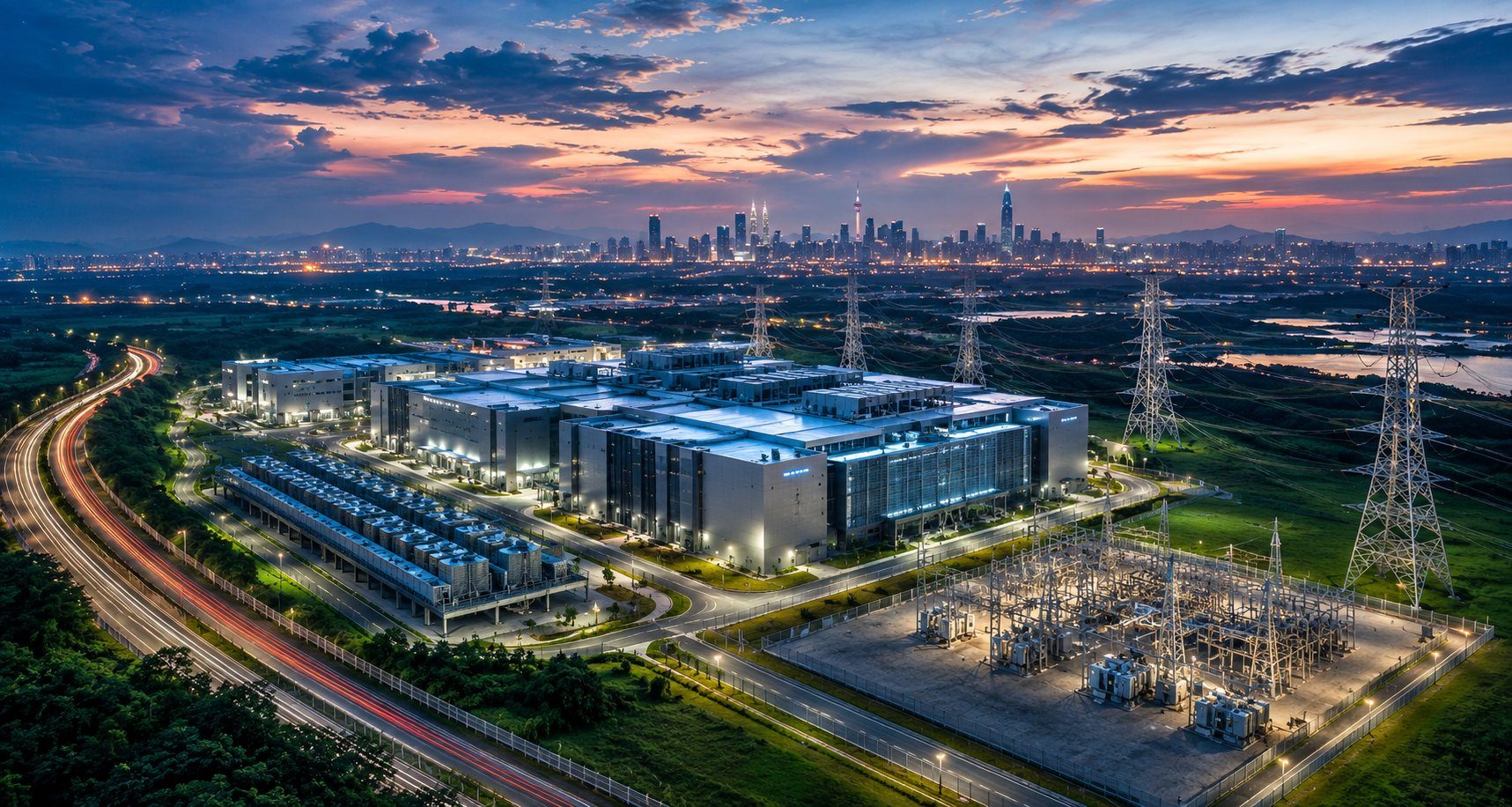
Large data centre projects in Malaysia pass through a national coordinating body as well as the ordinary state and local approvals. Understanding that layer — and the local content condition attached to it — belongs in your programme from the start.
What the DCTF is
Malaysia's Data Centre Task Force was formed in February 2025 to coordinate the approval of large data centre projects across ministries and states. It sits above the ordinary approval machinery: you still need your land conversion, planning permission and utility agreements, but for a project of scale the DCTF track is where national coordination happens.
What it has approved
Up to July 2026, the DCTF had approved 27 projects with a combined value of about RM225.97 billion. The distribution was:
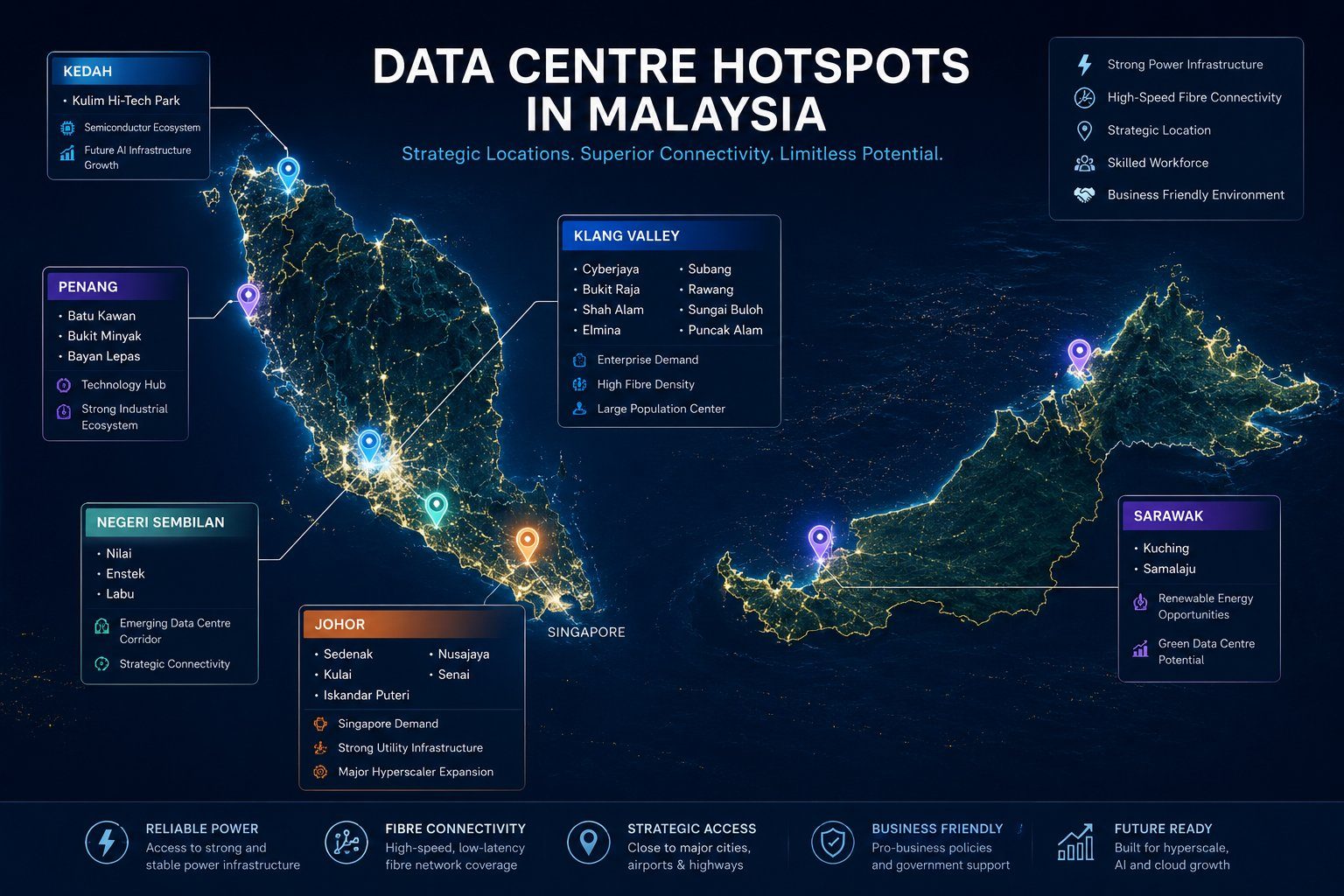
- Johor — 16 projects
- Selangor — 10 projects
- Negeri Sembilan — 1 project
Of those 27, only one was operating; the remaining 26 were still under construction. Collectively they were expected to create around 4,053 jobs, of which roughly 3,523 were high-skilled.
Why the one-operating figure matters to a land buyer
Approval is not completion. Asking prices across a district tend to jump on announcement, but a pipeline that is 26-parts-under-construction tells you that delivery risk is real and schedules move. Price land on registered transactions rather than on an approval someone announced.
The 30% local content requirement
Every DCTF-approved project carries a minimum 30% local content requirement. MIDA monitors compliance through implementation reports submitted every six months.
What that means practically
Local content is a procurement planning exercise that needs addressing in your submission and tracked through delivery — construction packages, equipment supply, and services sourced within Malaysia. It is manageable, but it is a reporting obligation with a cadence, and discovering it after you have placed your major contracts is an expensive sequence.
The reporting cadence is the practical trap
Six-monthly implementation reports mean the obligation is continuous rather than a one-off box at approval. Build the tracking into your procurement systems at the outset so the reports are a byproduct of normal records rather than a scramble every half year.
The state layer on top
Johor's Special Technical Committee
Johor established an additional committee assessing projects specifically on water demand, electricity demand, utility infrastructure and site suitability. Given that Johor holds 16 of the 27 approvals and carries roughly 8,542 MW of pipeline against about 1,110 MW live, this scrutiny is a rational response to aggregate demand rather than obstruction.
Selangor
Activity concentrates in the Cyberjaya, Sepang, Dengkil and Banting corridors, where local authorities have accumulated experience with these schemes. That experience makes timelines more predictable, which has real value even where it does not make them shorter.
What the approval layer means for your programme
Plan the DCTF and state technical approvals in parallel with land conversion, planning permission and the utility connection — not sequentially. Even run in parallel, the combination is why a Malaysian data centre typically takes three to five years from site identification to live capacity, with the utility connection usually setting the critical path.
And what it means for land value
A parcel attached to a project already through the DCTF track, with planning consent and a lodged power application, is a fundamentally different asset from raw land with good adjacency. The premium for that position is frequently less than the cost of carrying the risk and the years yourself.
How Ken helps
Ken brokers data centre and development land with the approval and utility position established before marketing. If you are assessing a site — or own one — he can tell you where it genuinely sits on the path to a deliverable project.

Frequently Asked Questions
What is the DCTF?
Malaysia's Data Centre Task Force, formed in February 2025 to coordinate approval of large data centre projects across ministries and states. It sits above the ordinary state and local approval machinery.
How many projects has the DCTF approved?
Twenty-seven projects worth about RM226 billion up to July 2026 — 16 in Johor, 10 in Selangor and one in Negeri Sembilan. Only one was operating; 26 were under construction.
What is the 30% local content requirement?
Every DCTF-approved project must meet a minimum 30% local content threshold, with MIDA monitoring compliance through implementation reports submitted every six months. Build the tracking into procurement from the outset.
Does Johor have extra requirements?
Yes. Johor runs a Special Technical Committee assessing water demand, electricity demand, utility infrastructure and site suitability — a rational response to carrying 16 of the 27 approvals and roughly 8,542 MW of pipeline.
Should approvals run sequentially or in parallel?
In parallel. Run the DCTF and state technical approvals alongside land conversion, planning permission and the utility connection. Even then, total programmes run three to five years.
Thinking of buying or selling in Malaysia?
Ken Tck is a Semi-D & Bungalow Specialist across KL & Selangor. Get current listings, honest pricing and a free valuation — no obligation.